Community
By Sofia Patel
Advertisement · Why this ad?
Jason Reed, with a background in sociology from West Virginia University, has dedicated the last 5 years to uncovering community stories in Pittsburgh. His work has appeared in various local outlets, where he exclusively reports on grassroots initiatives and social justice issues.
More from Jason →As the sun dipped below the horizon, casting a golden hue over the Southwestern landscape, families prepared for what they thought would be a typical evening. But for many, the tranquility was soon shattered by the sound of heavy rain pounding on rooftops, followed by the ominous roar of rushing water. In communities already grappling with the impacts of climate change, the recent surge in storms and flash floods has left families scrambling for safety and support. Experts are pointing to an intense El Niño phenomenon, described as a "super duper" event, as a significant factor behind this alarming trend.
According to meteorologists, this year's El Niño is expected to be one of the strongest on record, leading to unprecedented weather patterns across the Southwest. The National Oceanic and Atmospheric Administration (NOAA) has reported an increase in rainfall, with some areas experiencing double the usual precipitation. This has resulted in flash floods that have devastated neighborhoods, uprooted families, and disrupted lives.
The recent storms have not only caused property damage but have also raised concerns about public safety. Roads have been washed out, emergency services have been stretched thin, and communities are facing the daunting task of recovery. In a region where families often rely on stable weather patterns for agriculture and daily life, the unpredictability of these storms poses a serious threat to their livelihoods.
Local farmer Jake Ramirez, who has worked the land for over 20 years, expressed his concerns: "We depend on the seasons to plant our crops. With these unpredictable storms, we’re losing harvests, and it’s tough to see our hard work washed away. It’s not just about the money; it’s our way of life."
In the wake of these storms, residents are coming together to support one another. Local churches and community organizations are stepping up, providing shelter and resources for those displaced by the floods. The faith-based community has been particularly active, as many see this as an opportunity to live out their values of compassion and service.
"We are all in this together," said Pastor John Thompson of the First Baptist Church in Phoenix. "When one of us suffers, we all suffer, and it's our duty to help our neighbors in need." His church has opened its doors to families who have lost their homes, offering food, clothing, and a safe place to stay. The church has also organized a community meal program to ensure that everyone has access to nutritious food during these challenging times.
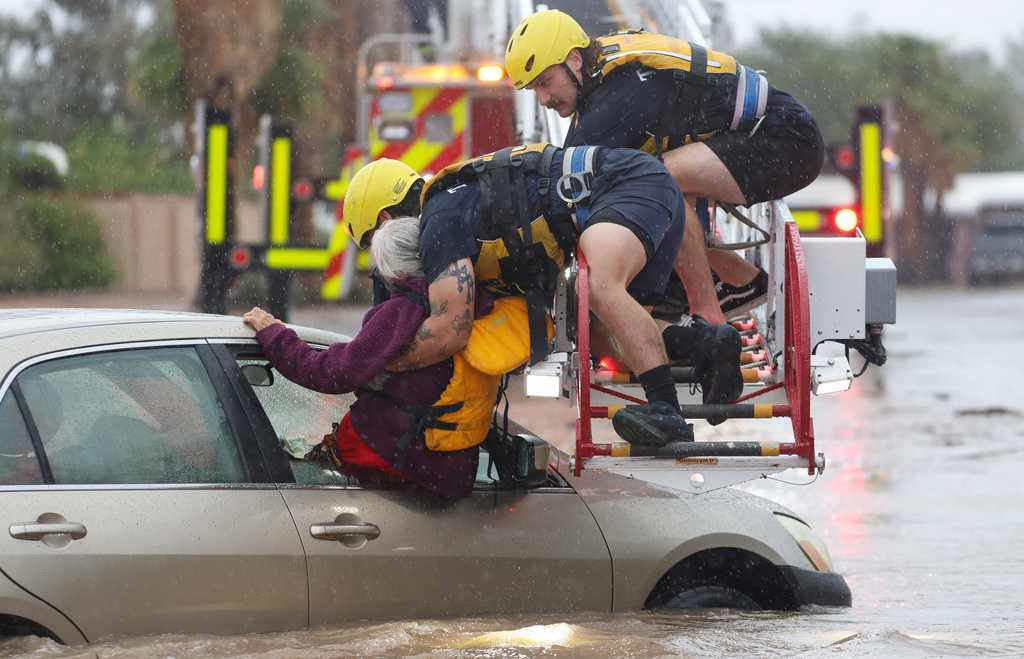
Among the local heroes emerging from this crisis are volunteers who have dedicated their time to rescue efforts. Groups like the Southwest Rescue Team have been instrumental in reaching those trapped by rising waters. Their bravery and selflessness have not gone unnoticed, as community members express their gratitude for the risks these volunteers take to save lives.
"I can't thank them enough for what they do," said Maria Gonzalez, a local resident who was rescued from her flooded home. "They are the true definition of heroes, and we are forever grateful for their help." The Southwest Rescue Team, comprised of local firefighters, police officers, and community volunteers, has worked around the clock to ensure that no one is left behind. Their efforts have inspired many to join in, with residents offering food and supplies to the teams as they work tirelessly to save others.
El Niño is a climate pattern that occurs in the Pacific Ocean, characterized by warmer-than-average sea surface temperatures. This phenomenon can significantly influence weather patterns around the globe. As the current El Niño intensifies, scientists predict it will lead to more extreme weather events, including heavier rainfall and increased flooding in the Southwest.
Dr. Emily Carter, a climatologist with NOAA, explains, "The current El Niño is particularly strong, and we are already seeing its effects. The warmer waters in the Pacific are contributing to increased moisture in the atmosphere, which translates to more intense storms and rainfall in regions like the Southwest." This scientific understanding is crucial for communities as they prepare for the challenges ahead.
In light of these findings, local governments are beginning to implement educational programs to inform residents about the implications of El Niño and how to prepare for severe weather. Workshops on emergency preparedness and disaster response are being held in community centers, aiming to equip families with the knowledge they need to stay safe.
The impact of these storms is not just immediate but will also have long-term consequences for families and businesses. Many small businesses that rely on foot traffic and stable weather are struggling to stay afloat. The economic ripple effect of these floods could be felt for years, as communities work to rebuild and recover.
In addition to the economic toll, the emotional strain on families cannot be overstated. Displacement, loss of property, and uncertainty about the future weigh heavily on those affected. Mental health resources are becoming increasingly important as families navigate these challenges. Local organizations are mobilizing to provide counseling and support services to help residents cope with the psychological impact of the floods. Support groups are forming, where residents can share their experiences and feelings, fostering a sense of community and understanding.
In response to the ongoing crisis, various organizations are stepping up to provide relief and recovery resources. The American Red Cross has been actively involved in providing shelter, food, and medical assistance to those in need. Their efforts are vital in ensuring that families have access to basic necessities during this challenging time.
Additionally, local government agencies are working to assess damage and provide assistance to affected residents. The City of Phoenix has set up a dedicated hotline for residents to report damage and seek help. They are also coordinating with nonprofits to streamline recovery efforts and ensure that resources are effectively distributed. Community leaders are urging residents to stay informed and utilize available resources, emphasizing the importance of coming together during this crisis.
As the region braces for more storms, the question on everyone's mind is: what lies ahead? Experts warn that the effects of this El Niño may last well into the next year, meaning that communities must remain vigilant and prepared for future weather events. Emergency preparedness plans are being updated, and families are encouraged to create their own safety plans.
Community leaders are also advocating for long-term solutions to mitigate the impact of climate change. This includes investing in infrastructure improvements, such as better drainage systems and flood control measures, to protect neighborhoods from future flooding. Local officials are exploring partnerships with environmental organizations to implement sustainable practices that can help reduce the risk of flooding in the future.
Ultimately, the strength of these communities lies in their resilience. As families band together to support one another, they exemplify the power of unity in the face of adversity. The road to recovery may be long, but with faith, determination, and a commitment to one another, these communities will rise again. As they rebuild, there is hope that this experience will foster a greater sense of community and a collective commitment to addressing the challenges posed by climate change.